Client Name: The Selby Centre
Type of Project: Eco-Audit
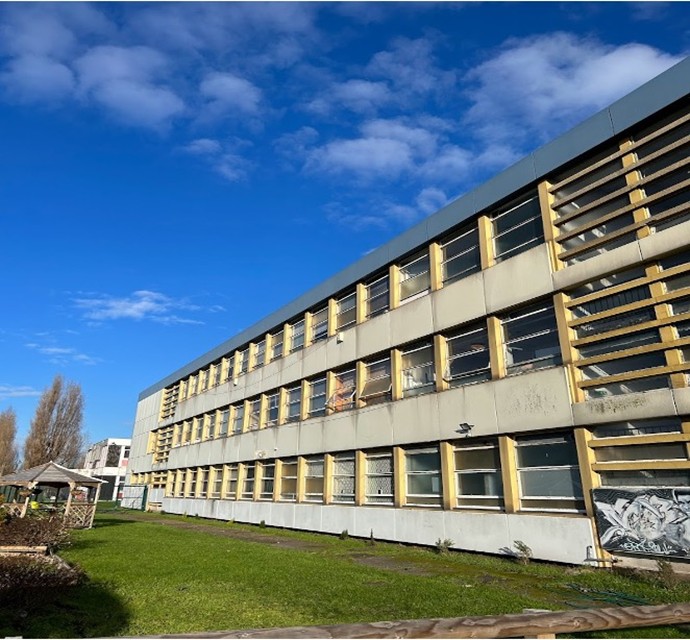
Location: Selby Road, London
Scope of Projects
Eco-Audit
Sustain Quality were instructed to carry out an Eco-Audit for The Selby Centre, a third-sector organisation that brings together a rich mix of individuals and organisations. The purpose of the project was to outline their current practices and building state and recommend actions to improve their environmental performance.
Furthermore, we developed a tailored Environmental Policy, Carbon Emissions Report, and an Environmental Awareness Presentation.
Finally, we conducted a final review in which we refined their action plan and recalculated their carbon emissions to track their progress.
Waste Management Plan
During the Eco-Audit process, Sustain Quality, in collaboration with Power to Change, were commissioned to carry out a waste audit at The Selby Centre. This collaboration aimed to thoroughly assess the centre’s waste management practices and identify areas for improvement.
Following this audit, a detailed waste management plan outlining strategic measures to enhance waste reduction, implement recycling, and promote sustainable practices was provided, as well as composting guidance covering best practices.
Tools for Implementation
Eco-Audit
An Eco-Audit was conducted to measure, analyse, and report this organisation’s environmental impact and outline their social impacts. Furthermore, we provided contextual recommendations for improvement.
We began by conducting a site visit where we investigated The Selby Centre’s existing practices and reviewed their building facilities. Thereafter, we prepared a report outlining these impacts with recommendations for improvements.
Impacts were structured thematically in an Eco-Audit Report into the following themes: Environmental Policy, Procurement, Energy, Waste, Water, Health and Wellbeing, and Travel. Within these themes, recommendations to reduce these impacts were provided.
We are passionate about a whole-rounded approach, and so following the Eco-Audit, we carried out additional supporting activities. Among them is a Carbon Emissions Report, which accounted for Scope 1, Scope 2, and material Scope 3 emissions. Furthermore, we facilitated an Environmental Awareness presentation for key stakeholders.
Waste Management Plan
Similar to the Eco-Audit project, we conducted a site review; however, this time we focused specifically on waste at The Selby Centre as they had no recycling or composting infrastructure in place. The goal was to minimise the environmental impact of waste generation and subsequent carbon emissions, thereby fostering a more sustainable waste management future.
Thereafter, we developed a comprehensive Waste Management Plan outlining specific management measures, analysing cost-benefit aspects, objectives and suppliers for recycling and composting. This was followed by providing a document outlining composting, providing guidelines and recommendations for effective composting practices, and designing a tailored composting system for the centre, taking into consideration the specific requirements and constraints of the facility.
At the end of 2024, the whole team at Sustain Quality visited the centre and, in a collaborative effort, organised the area for the composting bays, and they were later installed.
Challenges for Task
Eco-Audit
Obtaining accurate data for the reporting period proved to be challenging. For example, gas readings for one of the four meters were incomplete throughout the reporting period, and water and wastewater consumption were estimated for most of the months.
Waste Management Plan
Due to the nature of The Selby Centre, being a third-sector organisation, there are budget constraints which limited the recycling and composting facilities.
Solutions to Task
Eco-Audit
We made estimations for missing periods and allocated data to the reporting period, utilising additional calculation methods to ensure the most accurate result with the data available.
Waste Management Plan
The recycling strategy was refined to not require as many bins (e.g., central bins as opposed to a bin in every room) and collections from the supplier.
Furthermore, the composting bays were donated and built by volunteers and members of staff.
Key Project Achievements
The Selby Centre reduced their electricity consumption by approximately 77.77% from 2022/23 to 2023/24. This significant decrease may be attributed to enhanced monitoring and more accurate recording of consumption. They also communicated that staff and tenants were more engaged in conserving energy, such as by turning off lights and equipment when not required.
The Selby Centre ensure that, when possible, items are ethical and sustainable. They monitor their energy consumption through a well-developed system, have installed composting bays at the centre to initiate formal composting, monitor waste through the Veolia website, and monitor their water consumption. Several presentations were held to educate staff on waste management and composting.
Furthermore, we have collaborated with The Selby Centre and a corporate company in clearing the area for the composting bay, ensuring it is ready for installation.
As part of the centre’s commitment to making a greener and fairer place for all, they are developing the Selby Urban Village in partnership with Haringey Council, a new sustainable community building integrating a new sporting facility, affordable Council homes, and a new park with greener spaces, bringing communities and cultures together.
Benefits for Clients
The Eco-Audit identified both positive and negative environmental and social impacts and suggested tailored recommendations for improvement. This provided our client with the opportunity to improve transparency, accountability, awareness and engagement of staff and community members, as well as identify areas to make significant reductions in resource consumption, carbon emissions and costs.
Location
Selby Road, London